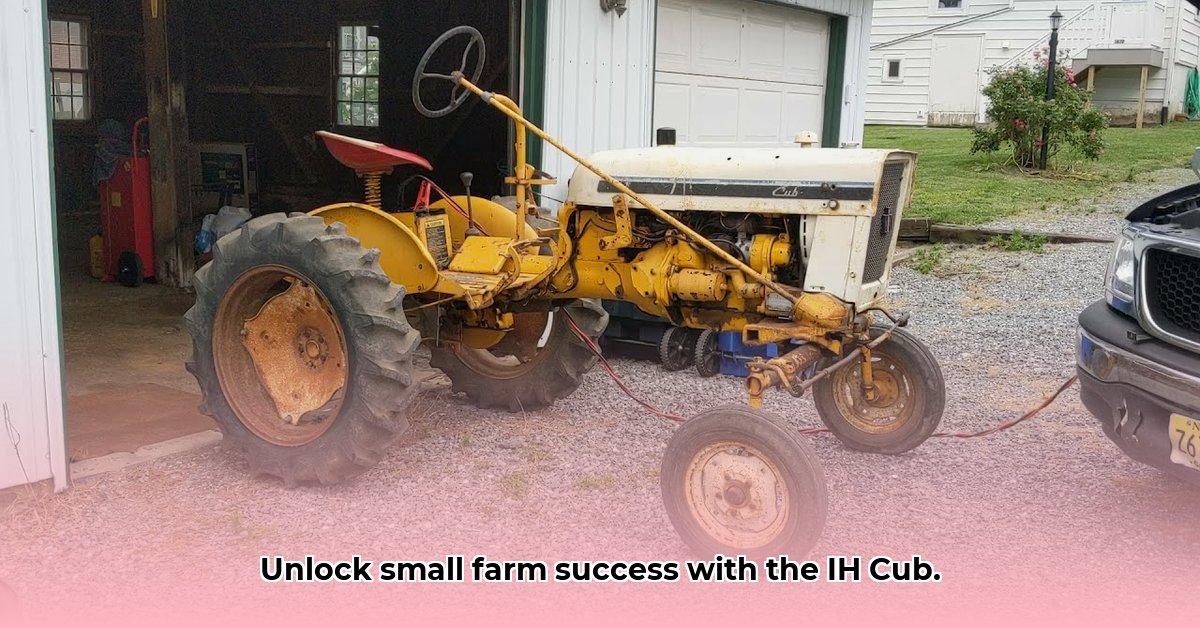
The International Harvester Cub tractor: a name that whispers of simpler times, yet speaks volumes about sustainable farming today. This iconic machine, once a mainstay on small farms, offers a surprisingly viable path to environmentally conscious agriculture in the 21st century. This guide provides practical, step-by-step instructions to help you determine if a Cub tractor is right for your needs, and if so, how to restore, maintain, and even adapt it for modern farming techniques. For those considering other options, check out information on the price of other tractors like Kubota here.
Assessing Your Farm's Needs: Is a Cub Tractor Right for You?
Before you're captivated by the Cub's vintage charm, consider its practical limitations. Its compact size and 13 horsepower are ideal for smaller operations—gardens, orchards, and small fields. But, is it suitable for your farm?
Consider these key factors:
Land Size: Is your acreage manageable with a small, maneuverable tractor? The Cub excels in tight spaces but might struggle on larger properties. Are your fields easily accessible to a compact tractor?
Crop Types: What are you growing? The Cub’s power is better suited to lighter tasks like tilling small gardens or cultivating delicate crops. Heavy-duty plowing might be beyond its capabilities. Will the Cub's power be sufficient for your specific crops?
Existing Equipment: The Cub's counter-clockwise power take-off (PTO) is crucial. Many modern implements are designed for clockwise PTOs. Check compatibility! Do you have appropriate implements or the resources to adapt existing ones?
Mechanical Skills: Are you comfortable with basic mechanics? While relatively simple, repairs may arise. Access to resources like repair manuals and online forums is invaluable. Are you prepared to handle routine maintenance and potential repairs?
Restoring and Maintaining Your International Harvester Cub Tractor: A Labor of Love
Restoring and maintaining a vintage Cub is a rewarding journey, blending practical skills and detective work. Think of it as nurturing an enduring partnership with your machinery. Here's a basic maintenance routine:
Cleanliness: Thoroughly clean your Cub before each use to prevent dirt from clogging vital parts. A clean machine is a happy machine!
Fluid Checks: Regularly check engine oil, coolant, and transmission fluid levels. Maintaining correct levels is vital.
Belt and Hose Inspection: Carefully check for cracks, wear, or leaks. Replace damaged components immediately – a small leak can become a major problem.
Lubrication: Regularly lubricate moving parts as outlined in your owner's manual—crucial for smooth operation.
Addressing Issues: Don't ignore small problems. Early detection and repair prevents larger, more costly damage.
Simple repairs (spark plugs, carburetor adjustment) are often manageable with basic tools and a repair manual. For more intricate repairs, seek professional assistance or consult experienced Cub owners online.
Adapting Your Cub for Modern Farming: Creative Solutions
The counter-clockwise PTO presents a challenge but also sparks ingenuity. Many modern implements are incompatible without modification.
Sourcing Older Implements: Search for implements designed for counter-clockwise PTOs. Online marketplaces and auctions are good resources.
Custom Adapters: Fabricating adapters requires welding and mechanical skills, or expert assistance. This offers customization opportunities.
Community Collaboration: Connect with other Cub owners through online forums to share experiences and solutions. A supportive community is priceless.
Sustainable Small-Scale Farming with Your Cub Tractor: Environmental Considerations
The Cub's sustainability isn't just a marketing term; it's inherent in its design.
Reduced Soil Compaction: The Cub's lightweight design minimizes soil compaction, crucial for preserving soil health. This is a direct benefit of its smaller size and weight compared to modern tractors.
Fuel Efficiency: While not the most fuel-efficient tractor today, its smaller engine consumes less fuel than larger tractors for comparable tasks, lowering your carbon footprint.
Simplicity and Longevity: The Cub's simple mechanics translate to fewer parts and less reliance on complex electronics; promoting longevity and reducing environmental impact.
Mindful Farming: The Cub encourages a slower, more thoughtful approach to farming, aligning closely with sustainable practices.
While precise environmental data is limited, the Cub's design promotes sustainable principles—encouraging lower-impact farming by reducing reliance on heavy machinery and fossil fuels.
Risk Assessment and Mitigation: Proactive Planning
Owning a Cub tractor involves inherent risks, but proactive planning can minimize potential issues.
| Factor | Risk Level | Mitigation Strategies |
|---|---|---|
| Parts Availability | High | Online forums, salvage yards, used parts dealers, 3D-printed parts |
| Repair Expertise | Medium | Repair manuals, online tutorials, local mechanics, mentorship programs |
| PTO Incompatibility | High | Sourcing older implements, custom adapter fabrication, community support |
| Safety | Medium | Regular inspections, adherence to all safety guidelines, operator training |
The International Harvester Cub tractor offers a unique blend of vintage charm and sustainable small-scale farming potential. Understanding its capabilities and limitations is key to maximizing its value in your agricultural endeavors.